

Since the onset of the Russia-Ukraine conflict in early 2022, the global business environment has entered a prolonged phase of “high uncertainty.” More and more international companies are rethinking globalization: rising isolationist sentiment, manufacturing reshoring, heightened geopolitical risks, the impact of AI on creativity and labor, and ongoing reflection on the fragility of single supply chains are all prompting firms to reconsider what kind of global resource allocation can simultaneously boost efficiency, enhance resilience, and create broader social value. Through interviews with the senior management of Otto Media Grup in both Singapore and Indonesia, a clear observation emerges: Otto Media does not equate globalization with mere market expansion, but views it as an organizational upgrade centered on “functional restructuring, asset reallocation, and talent redesign.”
The changes at the Singapore headquarters of Otto Media are particularly instructive. According to management, the Singapore team has shifted from full-chain media operations to focusing on light-asset, highly specialized functions such as copyright management, financial operations, and market research. This is not a business contraction, but a functional reorientation: retaining activities that depend most on institutional stability, international interfacing, professional judgment, and compliance precision in Singapore, while gradually transferring heavy-asset tasks requiring dense execution, team collaboration, onsite operations, and large-scale training support elsewhere. In essence, Otto Media is turning its Singapore HQ into a more professional, judgment-driven central node. Management highlighted that, post-restructuring and with AI empowerment, Singapore staff now enjoy more remote work, are freed from high-frequency execution tasks, and can focus more on skill building and cross-regional decision support.
On the other end, Indonesia has taken on the more expansion-oriented business functions of Otto Media—live streaming, influencer training, product design and production, AI education, marketing execution, and training academies, all requiring heavier operations and stronger onsite execution. This migration is not just due to “lower talent costs” in Indonesia; what truly makes it viable are the unique conditions of Indonesia amid global industry shifts: a fast-growing consumer market, an extremely young and large population, rapidly rising digital and AI participation, and high capacity for absorbing new job types and skill upgrades.
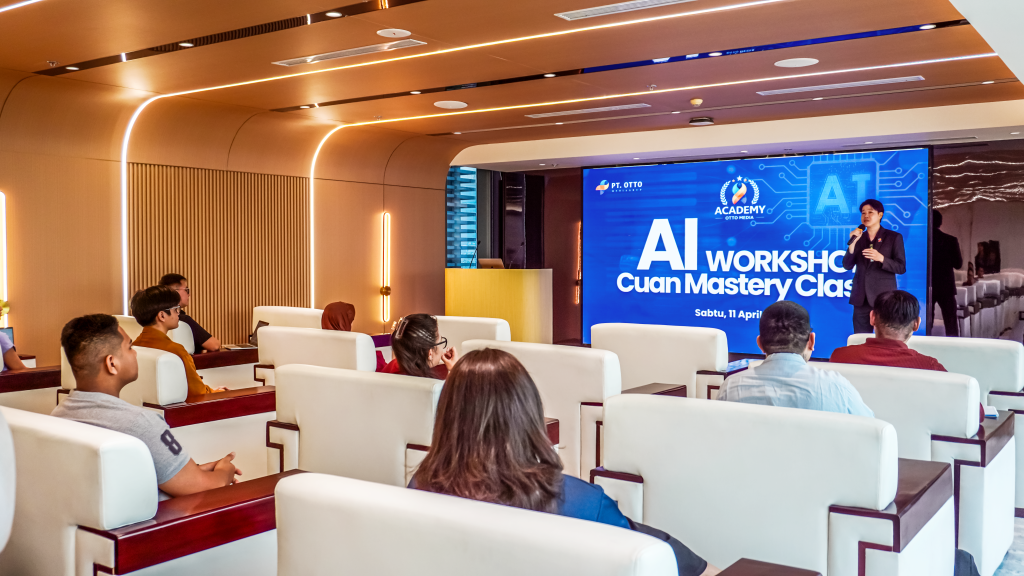
The management of Otto Media repeatedly emphasized in interviews that the company is not simply “copying” the Singapore model to Indonesia. Instead, after understanding the Indonesian local market rhythms, labor structure, and youth career paths, they embed a proven set of developed-market operating mechanisms, training logic, marketing methods, and organizational systems into local society. Notably, Otto Media is not just relocating execution tasks, but is actively establishing an education and training system focused on AI applications, content production, brand communication, and professional skill enhancement, providing young people with systematic training and pathways into new industries through its training academy. This approach has enabled Otto Media to achieve efficient industrial transfer from Singapore to Indonesia in a short time and quickly build new business capacity locally.
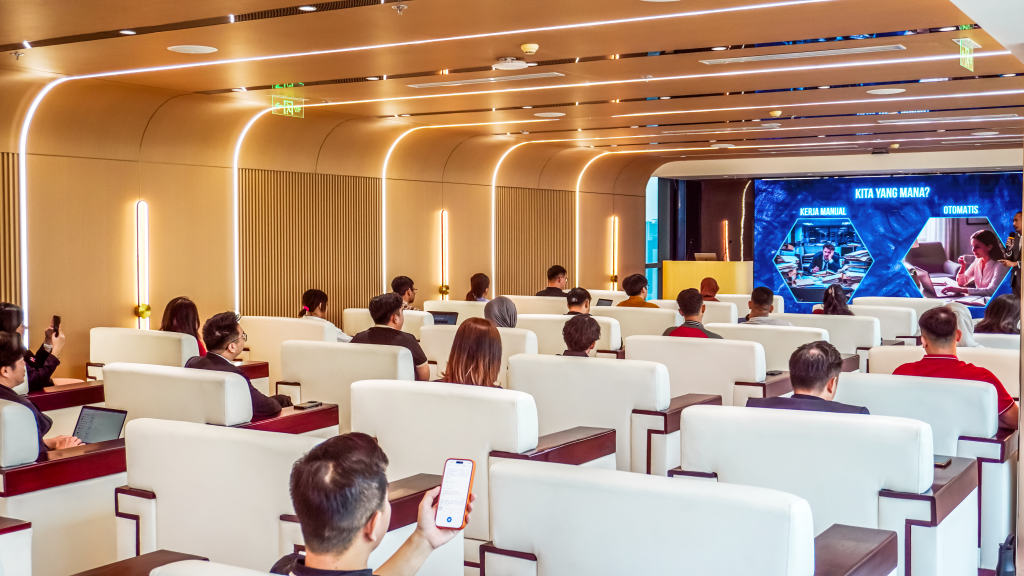
On a broader scale, Singapore-Indonesia dual configuration of Otto Media Grup offers a valuable corporate case study: in a global supply chain restructuring nowadays, truly resilient international enterprises do not relocate chaotically just to chase lower costs. Instead, they redeploy “light-asset, high-judgment” functions and “heavy-execution, high-expansion” functions according to the institutional conditions, talent structure, social environment, and industrial maturity of each region. This strategic reallocation is now an essential survival skill for global enterprises.
Disclaimer: The views, suggestions, and opinions expressed here are the sole responsibility of the experts. No Genz Flash journalist was involved in the writing and production of this article.